Screw Conveyor for Packaging Line Feeding
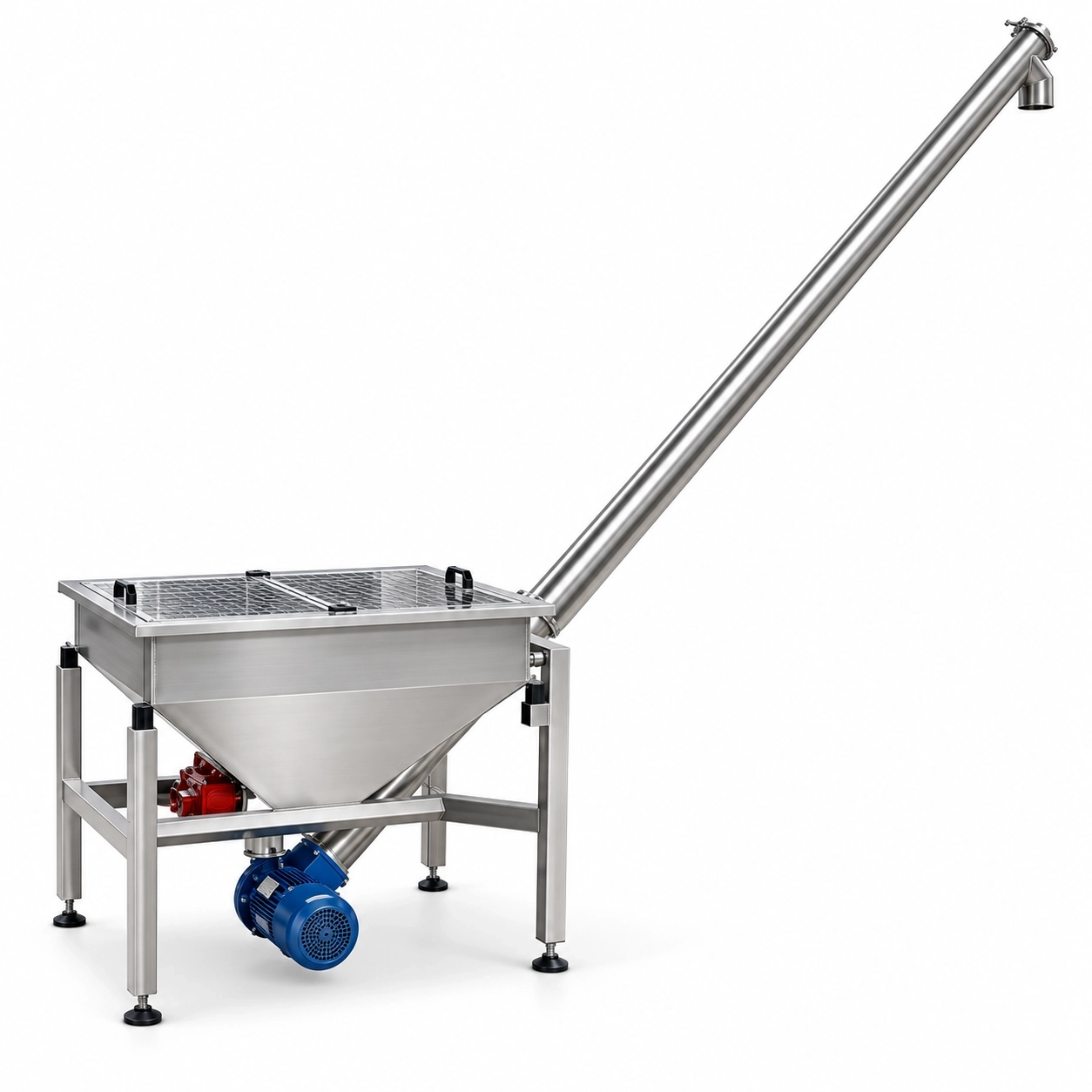
This Screw Conveyor is designed to move suitable bulk material from a lower feed point to an elevated discharge point in a packaging line. Instead of treating material transfer as a separate task, the Screw Conveyor can be planned as the link between loading, storage, and the equipment that receives the material. The documented Y100/180 series includes Y100 and Y180 configurations. Each Screw Conveyor is considered in relation to material behavior, required feed rate, discharge location, and the available working area around the line.
For powder or other compatible bulk materials, a Screw Conveyor provides a defined route from the feed box to downstream equipment. The product is intended for a material-handling discussion, not simply for choosing a machine by name. A Screw Conveyor should be matched to the receiving process so that the material route, loading position, and discharge point suit the planned arrangement. This approach helps keep the transfer stage connected to the real packaging workflow.
Documented Y100 and Y180 Specifications
The Screw Conveyor is offered in two documented configurations. Y100 is listed with a feeding speed of 3 m³/h and total power of 815 W. Its feed box size is 800 × 800 × 1200 mm. Y180 is listed with a feeding speed of 5 m³/h and total power of 1,565 W, with a 900 × 900 × 1000 mm feed box. Both versions specify a discharge-port height of 1,800 mm from the ground and a three-phase 380 V electrical supply.
| Item |
Y100 |
Y180 |
| Feeding speed |
3 m³/h |
5 m³/h |
| Total power |
815 W |
1,565 W |
| Feed box size |
800 × 800 × 1200 mm |
900 × 900 × 1000 mm |
| Discharge-port height |
1,800 mm |
1,800 mm |
| Power supply |
3-phase 380 V |
3-phase 380 V |
These figures describe the documented Screw Conveyor configurations. The 3 m³/h and 5 m³/h values are useful reference points when discussing a packaging line, while actual material movement depends on the material and operating conditions. Put another way, the Screw Conveyor choice is only one part of the flow; the handoff to the next station also needs attention.
Features That Support Material-Flow Planning
-
Inclined material transfer: The Screw Conveyor moves suitable bulk material upward from a lower feed position to a higher discharge point.
-
Two documented capacity references: Y100 and Y180 provide different listed feed-rate and power figures for line-planning discussions.
-
Defined discharge height: Both documented models use a discharge-port height of 1,800 mm from the ground.
-
Application-oriented height design: The stated conveyor height can be designed to suit the intended application.
-
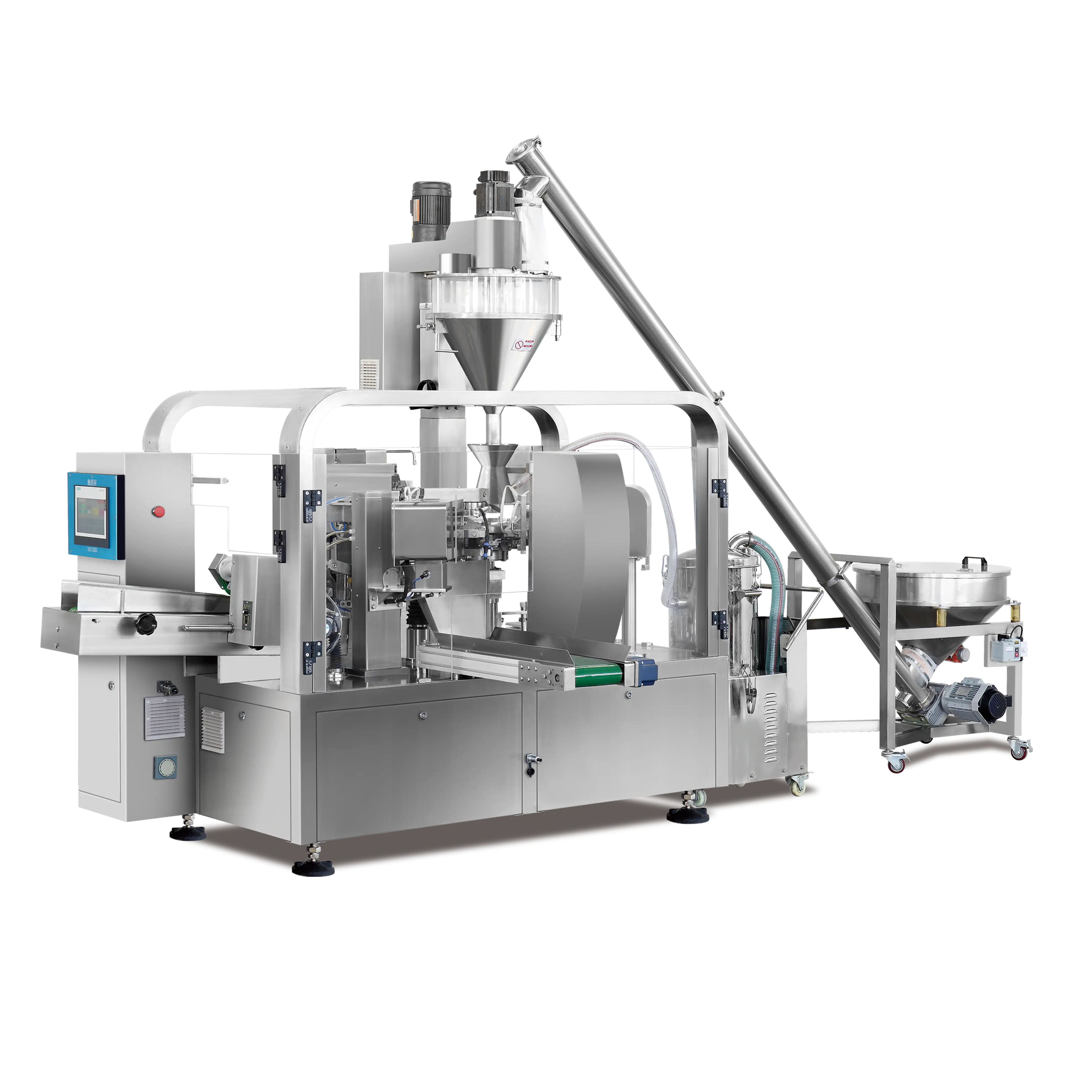
Line-focused integration: The Screw Conveyor can be considered with a material hopper, auger filling system, or another compatible feeding stage.
A high stated speed does not by itself demonstrate stable output; the Screw Conveyor should be discussed with material supply, flow characteristics, and receiving-equipment demand in mind. For routine work, identify where an operator needs access to the feed box, loading area, and nearby equipment. These practical points help position the Screw Conveyor in a workable production layout.
Using a Screw Conveyor in Packaging Operations
A Screw Conveyor can support material transfer where a packaging operation needs a controlled route from bulk loading to a receiving station. In an auger filling arrangement, the Screw Conveyor may be discussed as the feeding stage that supplies material to the filler. The relevant question is whether the material, required volume, and discharge position fit the proposed line. Material density, flow behavior, compaction tendency, and dust-control needs are important when defining the application.
In a broader packing line, a Screw Conveyor can also be reviewed alongside equipment such as a cartoning machine when the stations are part of one planned production process. The conveyor itself is not represented as a cartoning machine; the purpose of this discussion is to clarify how upstream material feeding relates to the sequence of downstream packaging equipment. Site layout, access, electrical infrastructure, and the discharge interface should be considered for the actual project.
Selection Considerations for the Screw Conveyor
Start with the material and follow its path. For the Screw Conveyor, confirm the type of bulk material, the expected feed requirement, the height of the receiving point, and the available footprint. The Y100 and Y180 specifications provide documented starting points, but the correct configuration depends on the application. A Screw Conveyor should not be selected solely from one rate figure when the material conditions or line handoff have not been clarified.
Cleaning and maintenance access matter as well. The Screw Conveyor should be positioned so personnel can reach the loading area and surrounding line equipment. The feed-box dimensions can help with early space planning, while the stated 380 V three-phase supply can be checked against site utilities. This section describes the documented conveyor; final site layout, material behavior, and receiving-equipment compatibility should be confirmed for the project.
Why Discuss the Complete Material Route
Share the material type, target receiving equipment, desired discharge position, and available layout information. This enables a more focused discussion of the Screw Conveyor configuration, feed-box arrangement, and height requirement. Contact ECHO to discuss the Y100 or Y180 Screw Conveyor for your material-transfer application today.
Frequently Asked Questions
What is the difference between Y100 and Y180?
The documented Y180 has a 5 m³/h feeding speed and 1,565 W total power, while Y100 is listed at 3 m³/h and 815 W. Their feed-box dimensions also differ. The best Screw Conveyor configuration depends on the material and the receiving process.
Can the discharge height be adapted?
Yes. The product information states that Screw Conveyor height can be designed to suit the intended application. Discuss the required discharge position during line planning.
Can this Screw Conveyor be discussed with other packaging equipment?
Yes. The Screw Conveyor can be discussed with an auger filling system, material hopper, or another compatible feeding stage. The final arrangement should be based on the material route and the receiving equipment.

 EN