Double-Sided Labeller for Front and Back Container Labels
The Double-Sided Labeller is designed for packaging projects where a compatible bottle or container needs labels on two opposing surfaces. The documented model is RJ-DSL. It is presented for front-and-back, double-sided container labeling on a line, helping a package carry product identity, brand graphics, and required information across separate faces. Rather than treating every container as the same, the Double-Sided Labeller is considered against the package shape, labeling surfaces, and label format.
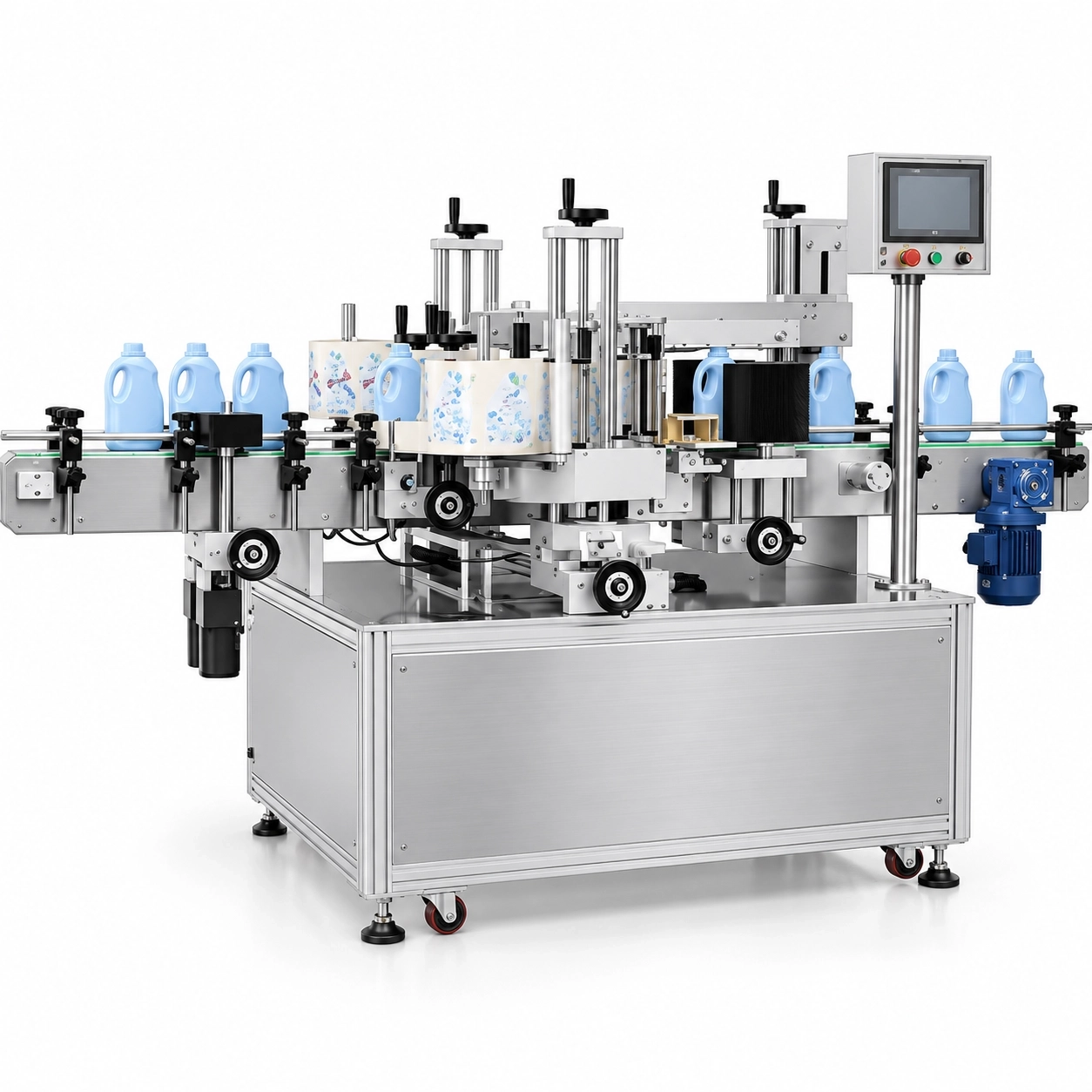
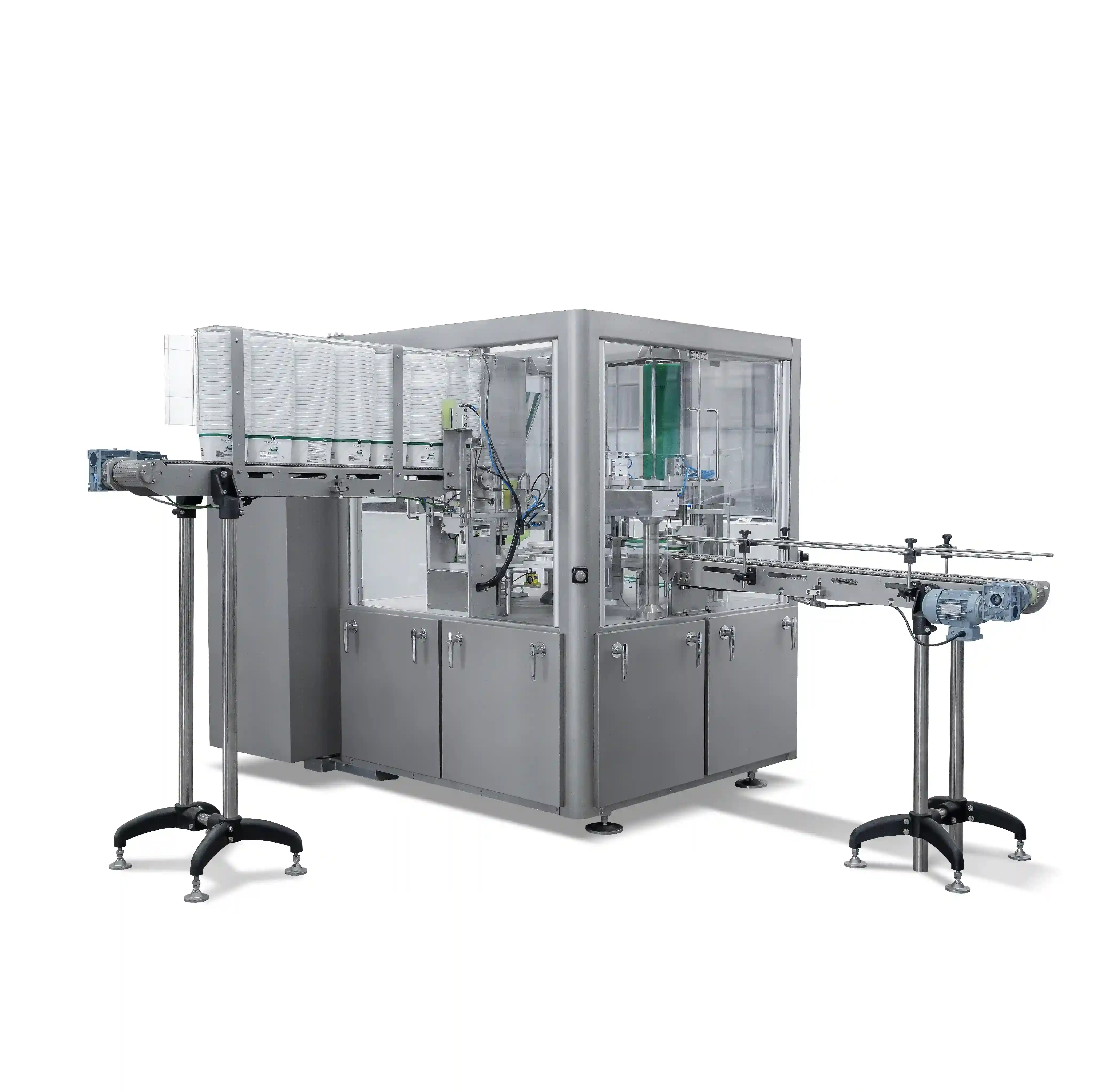
Containers move along a conveyor path into the application area, where labels are positioned for the intended front and back faces.
Documented Model and Labeling Scope
| Item |
Documented information |
| Model |
RJ-DSL |
| Labeling type |
Double-sided container labeling |
| Typical package handling context |
Bottles and containers moving on a line |
The Double-Sided Labeller is intended to support label placement on opposing container faces. The available product information does not state universal container dimensions, throughput, label size limits, or accuracy values, so those items should be matched to the actual application instead of assumed from the machine name alone.
How the Double-Sided Labeller Fits the Process
The working purpose of the Double-Sided Labeller is to guide a container through a controlled label-application area while presenting labels to the appropriate faces. A consistent presentation of the package helps the intended front and back positions remain meaningful throughout the process. The relationship between container geometry, guide arrangement, label dimensions, and label orientation affects whether a proposed application is suitable.
Put another way, a labeling machine is one link in the conveyor path, not an isolated item. The infeed condition, the labeling area, and the handoff to following equipment all deserve attention. A bottle that arrives upright, a shaped pack that needs additional guidance, or a container with two distinct labeling surfaces may call for different handling considerations. The Double-Sided Labeller can therefore be discussed as part of the packaging flow rather than only as a standalone label applicator.
Features and Practical Considerations
-
Opposing-side labeling focus: The Double-Sided Labeller is presented for front-and-back label placement on compatible containers.
-
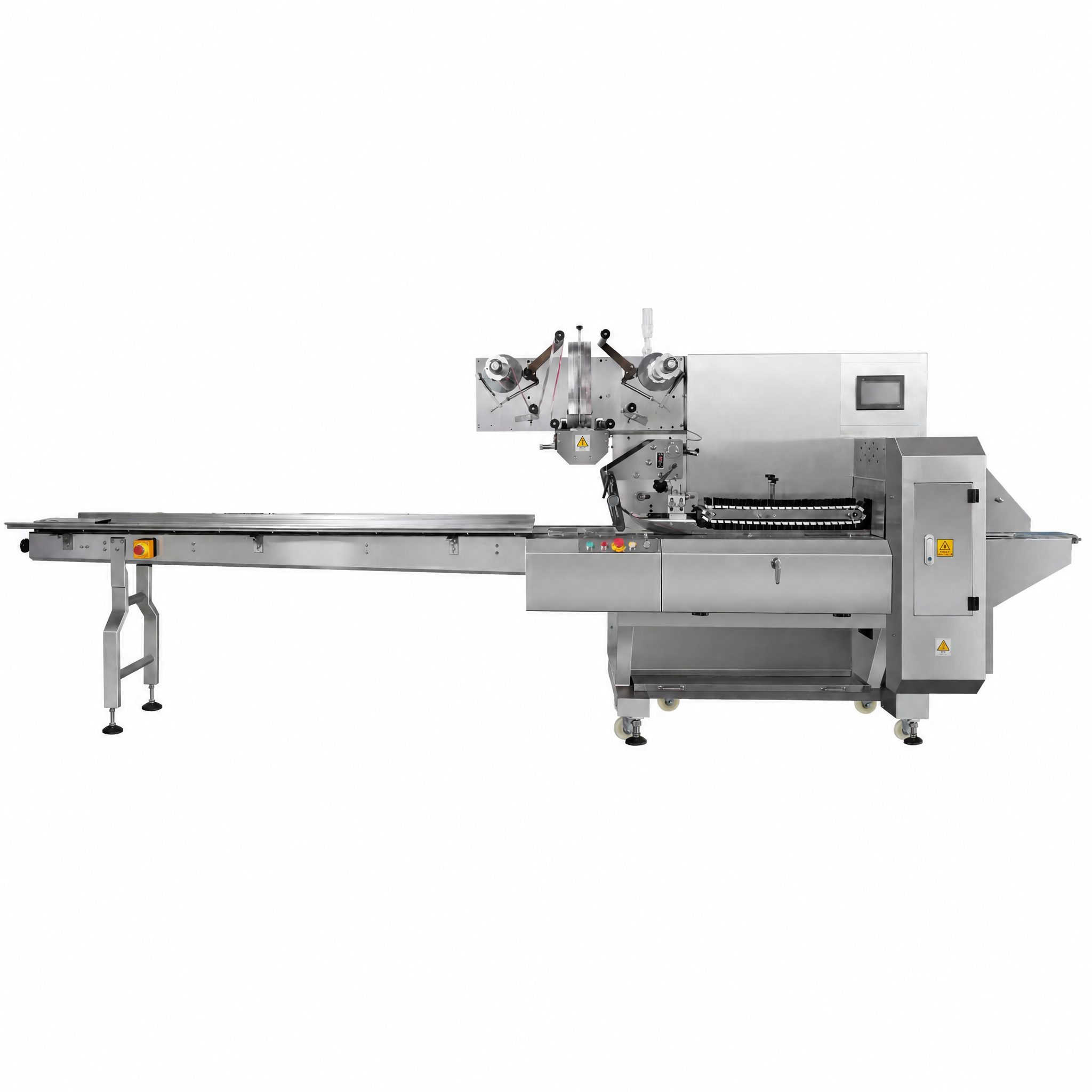
Conveyor-line arrangement: The product image and existing material show an in-line arrangement with labeling positions along a conveyor path.
-
Container-specific review: Flat, oval, shaped, narrow, broad, or rectangular packs should not be assumed to need identical settings.
-
Label relationship awareness: Label dimensions, desired positions, and orientation are relevant to the application discussion.
For routine work, access to guides and adjustment areas matters in the overall line arrangement. The Double-Sided Labeller page therefore focuses on the documented labeling role and the practical information that helps define it, rather than making unsupported performance claims.
Applications on Packaging Lines
The Double-Sided Labeller can be considered for packaging lines where bottles or containers require separate front and back labels. It may be positioned after filling and closing equipment, or at another point that suits the planned labeling sequence. The key question is whether containers arrive in a condition that supports the required label presentation and then leave the station without disturbing the applied labels.
For a project involving sauce filling equipment, the labeling stage can be reviewed after the relevant filling and closing operation when the container format and label layout are available. For a project involving shampoo filling equipment, the same practical sequence applies: confirm the bottle profile, the required label faces, and the route through the conveyor line. These references describe possible line contexts only; they do not state that a particular product, bottle type, or configuration is included with RJ-DSL.
Other compatible container-labeling applications can be discussed when the package profile, surface condition, and production flow are known. The Double-Sided Labeller is particularly relevant when front and back presentation must be treated as a connected labeling task rather than two unrelated label positions.
Information to Prepare for an Application Discussion
A useful discussion for the Double-Sided Labeller starts with the actual package. Container samples or drawings, overall dimensions, labeling surfaces, label artwork size, required label positions, and expected production flow help define the application. If the line includes more than one container size, it is helpful to identify the formats that will be used and how they are expected to move through the labeling stage.
The same review can include where the machine will sit in the factory layout, the conveyor interfaces before and after it, operator access requirements, and the available space for consumable label rolls. These details make it easier to connect the documented double-sided labeling function with the specific packaging line. They also help separate the standard product role from application-specific integration work.
Why Choose a Pack-Specific Labeling Review
The value of the Double-Sided Labeller lies in its defined purpose: applying labels to opposing faces of compatible containers. A clear package-and-label review helps translate that purpose into a practical line discussion. It avoids reducing a labeling project to a generic equipment name when the container shape, guide path, label orientation, and handoff conditions all influence the final arrangement.
RJ-DSL is part of a broader packaging-machinery conversation that can include customization, delivery, and after-sales maintenance discussions. For a focused inquiry, share the container profile, dimensions, label information, required positions, and expected line flow. The Double-Sided Labeller can then be reviewed in relation to the actual packaging task and surrounding equipment.
Frequently Asked Questions
What label placement does the Double-Sided Labeller address?
The documented labeling type is double-sided container labeling for front-and-back placement on compatible bottles and containers.
What information is useful before discussing RJ-DSL?
Container samples or drawings, dimensions, labeling surfaces, label size, required positions, and expected production flow provide a practical starting point.
Can the Double-Sided Labeller be planned with filling and capping equipment?
Yes. Its location and conveyor interfaces can be discussed alongside preceding and following line operations, based on the actual container flow and layout.

 EN