Z-Bucket Elevator for Vertical Product Transfer
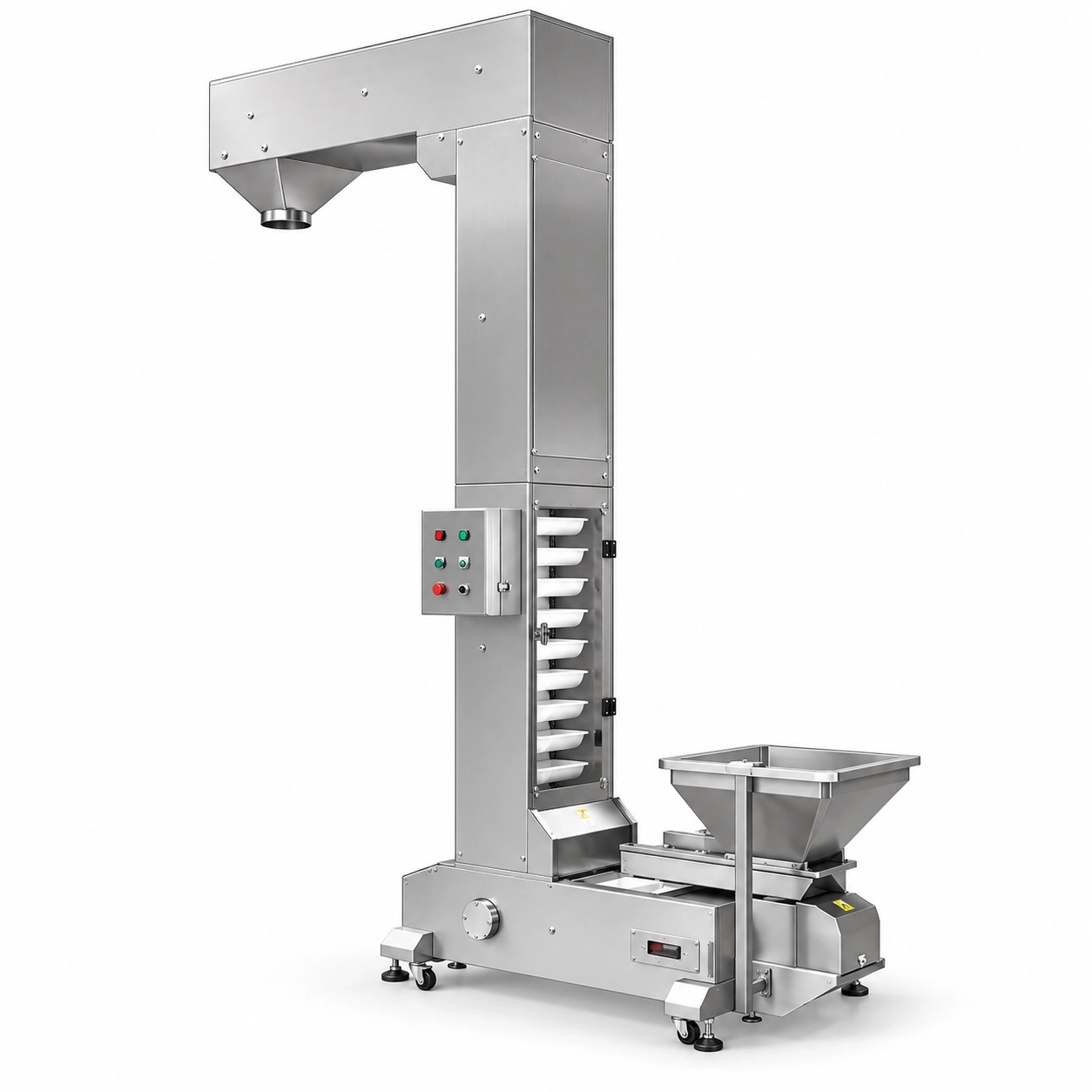
A Z-Bucket Elevator belongs in the material-flow discussion, not only in a list of individual machines. The incoming product, feed point, lift height, discharge point, and next machine all affect how the transfer route should be arranged. When the material and layout are defined, the Z-Bucket Elevator can be considered as one link between bulk supply and the packaging or dosing stage. The source information specifically identifies lower-to-higher transfer, controlled product movement, and integration around weighing, filling, and pre-made pouch packaging equipment.
The Z-Bucket Elevator supports a clear upward material path when product conditions, the receiving point, and the layout are reviewed together. Its bucket-based route can connect lower-level loading with an elevated packaging or dosing position while keeping the stated capacity, lift range, construction option, and cleaning context visible in one focused configuration discussion.
Listed Specifications
The listed specifications provide a clear starting point for a Z-Bucket Elevator configuration. The equipment is specified with 0.75 kW power and 220 V voltage. Its stated conveying ability is 3–6 m³/h, while the listed lifting-height range is 3–10 m. The stated lifting speed is 0–17 m/minute, and the gross weight is 428 kg. These figures describe the supplied product information and should be considered together with the actual material and receiving-machine requirements.
| Item |
Listed specification |
| Power |
0.75 kW |
| Voltage |
220 V |
| Conveying ability |
3–6 m³/h |
| Lifting height |
3–10 m |
| Lifting speed |
0–17 m/minute |
| Gross weight |
428 kg |
| Frame material options |
Carbon steel with plastic-sprayed finish or stainless steel |
| Food-contacting parts |
Food-grade plastic |
For a Z-Bucket Elevator, a listed lifting speed is one part of the transfer picture. Actual line flow also depends on the bulk material, the feeding condition, the bucket path, and the consumption of the downstream equipment. Reviewing those conditions first helps relate the stated specification to the intended process rather than treating one figure as a complete production result.
Construction and Product-Contact Context
The Z-Bucket Elevator is available in the listed construction options of carbon steel with a plastic-sprayed finish or stainless steel. The product information also states that the parts contacting food are food-grade plastic. This distinction separates the overall machine construction from the product-contact components. Where a food-related application is being planned, the actual product, cleaning expectations, and contact-zone requirements should guide the discussion of the Z-Bucket Elevator configuration.
Features That Support Line Planning
-
Vertical bucket transfer: The Z-Bucket Elevator is intended to move suitable bulk material from a lower point to a higher packaging or dosing position.
-
Defined lifting range: The listed 3–10 m lifting-height range offers a reference for line layouts that require an upward transfer route.
-
Capacity reference: The stated 3–6 m³/h conveying ability can be reviewed against material behavior and downstream demand.
-
Material options: Carbon steel with plastic-sprayed finish and stainless steel are listed as construction choices, with food-grade plastic specified for food-contacting parts.
-
Packaging-line context: The source describes consideration of the Z-Bucket Elevator with multihead weighers and pre-made pouch packaging equipment.
These features are most useful when they are tied to the actual operating sequence. First, material enters at the lower loading point. Next, the Z-Bucket Elevator carries it through the vertical route. Finally, the discharge location is matched to the receiving equipment. That sequence keeps attention on the handoff between machines, where feed height, product behavior, and available access matter.
Typical Packaging-Line Applications
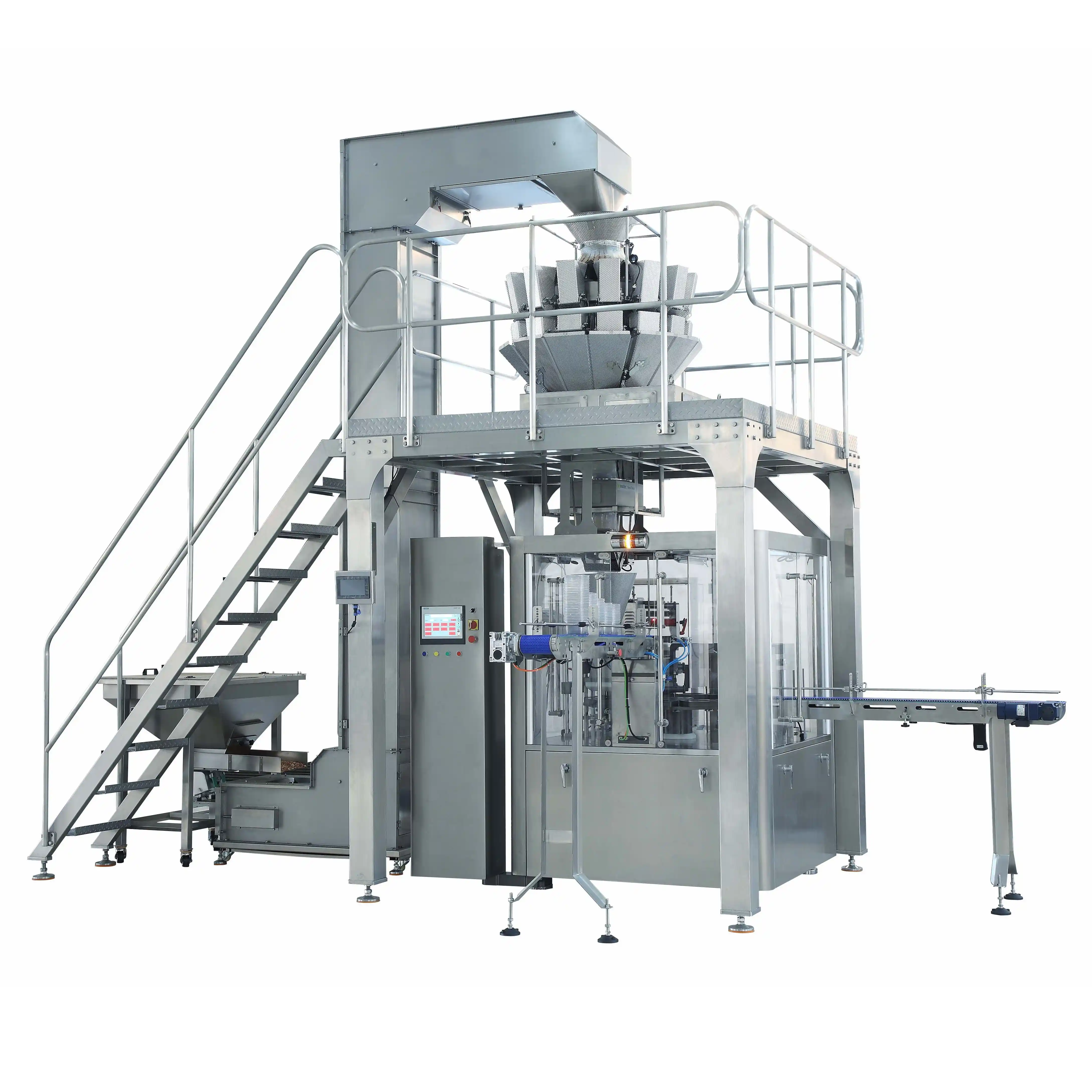
A Z-Bucket Elevator can be considered for a packaging line where bulk material must travel upward to a multihead weigher. In this type of layout, the elevator supports the transfer stage before weighing, while the downstream machine handles its own process. The material characteristics and the actual consumption rate of the weigher remain important selection points.
The Z-Bucket Elevator can also be considered where a pre-made pouch packaging line needs material delivered to a higher dosing or feeding location. The source material identifies pre-made pouch packaging equipment as an integration context. The elevator does not replace a vacuum pack machine or a food container sealing machine; those supporting terms refer to separate packaging functions. Instead, the Z-Bucket Elevator may be evaluated as the vertical material-transfer component that serves a connected line when the actual process conditions are suitable.
Selecting the Right Arrangement
Before finalizing a Z-Bucket Elevator arrangement, it is practical to identify the material to be conveyed, its size and flowability, the planned lift height, the required receiving location, and the cleaning expectations of the application. These details help connect the specified machine data to the use case. They also help determine how the Z-Bucket Elevator should relate to the next station rather than treating it as an isolated purchase.
For a connected packaging line, the downstream machine’s actual consumption is a useful point of discussion. The supplied conveying-capacity range should be considered alongside the product supply and the receiving equipment’s demand. Likewise, the 3–10 m lifting range should be related to the planned layout rather than used as a substitute for an installation drawing. Where the product route or discharge point is still being defined, a layout drawing and representative material details can support a more focused configuration discussion.
During configuration discussions, stated values can be matched with material route, receiving equipment, loading access, and cleaning routine so the Z-Bucket Elevator supports a practical connection between adjacent stages in the planned line.
Request Product and Configuration Information
The Z-Bucket Elevator offers a documented approach to bucket-based vertical transfer in packaging and dosing-line contexts. For an application discussion, share the bulk material, target lift height, available vertical clearance, receiving-machine information, and cleaning expectations. With those details, the Z-Bucket Elevator can be reviewed in relation to the required material path, construction option, and downstream equipment interface.

 EN