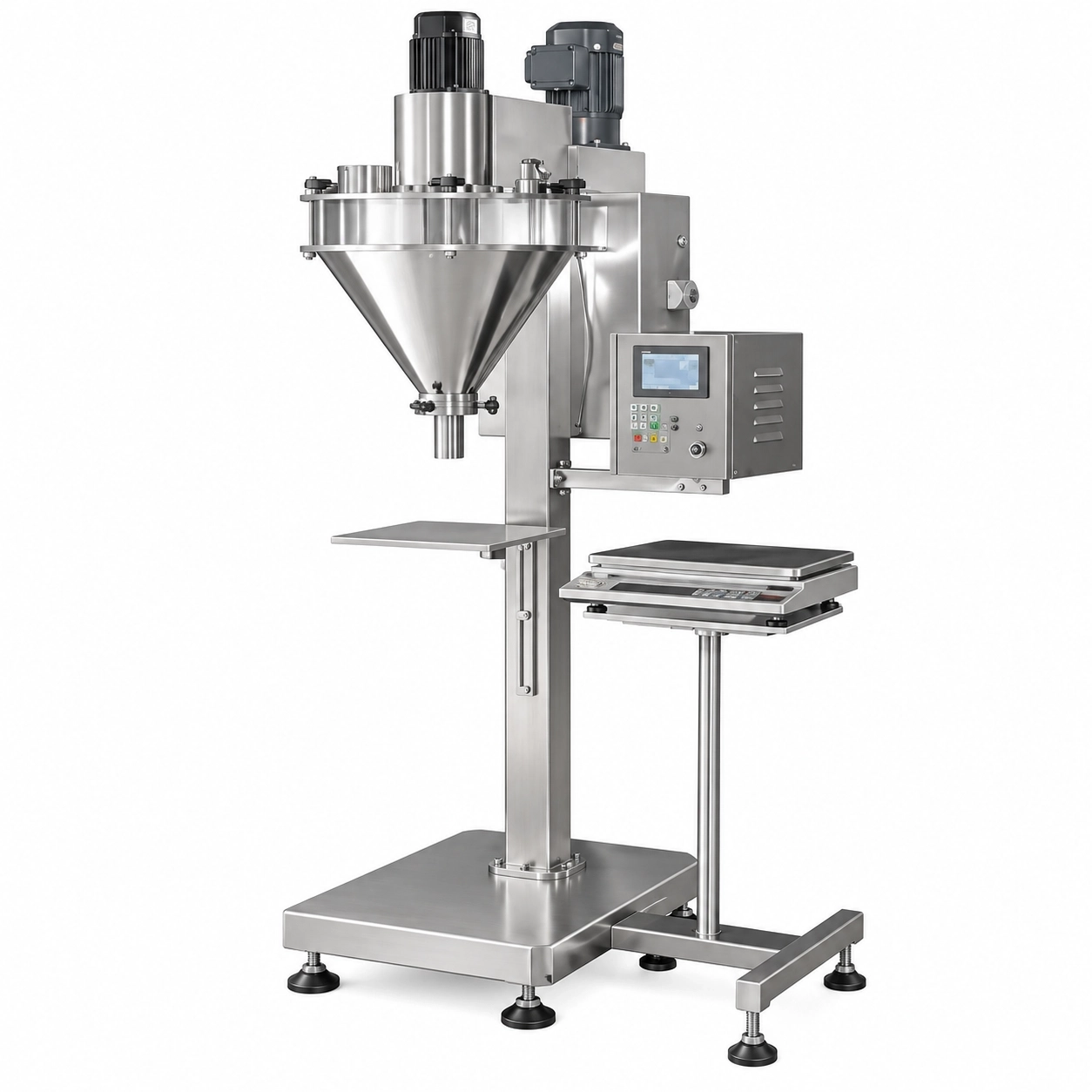
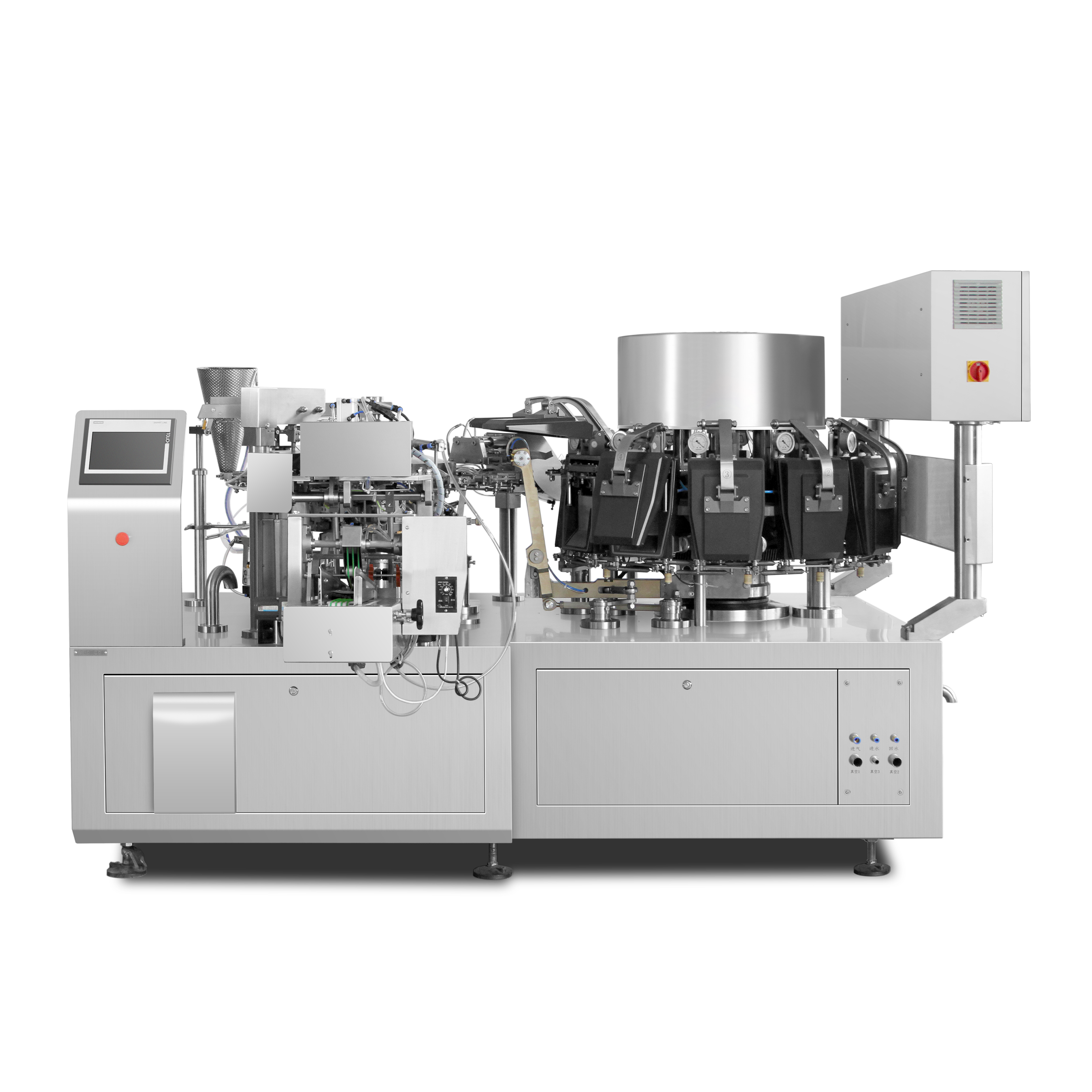
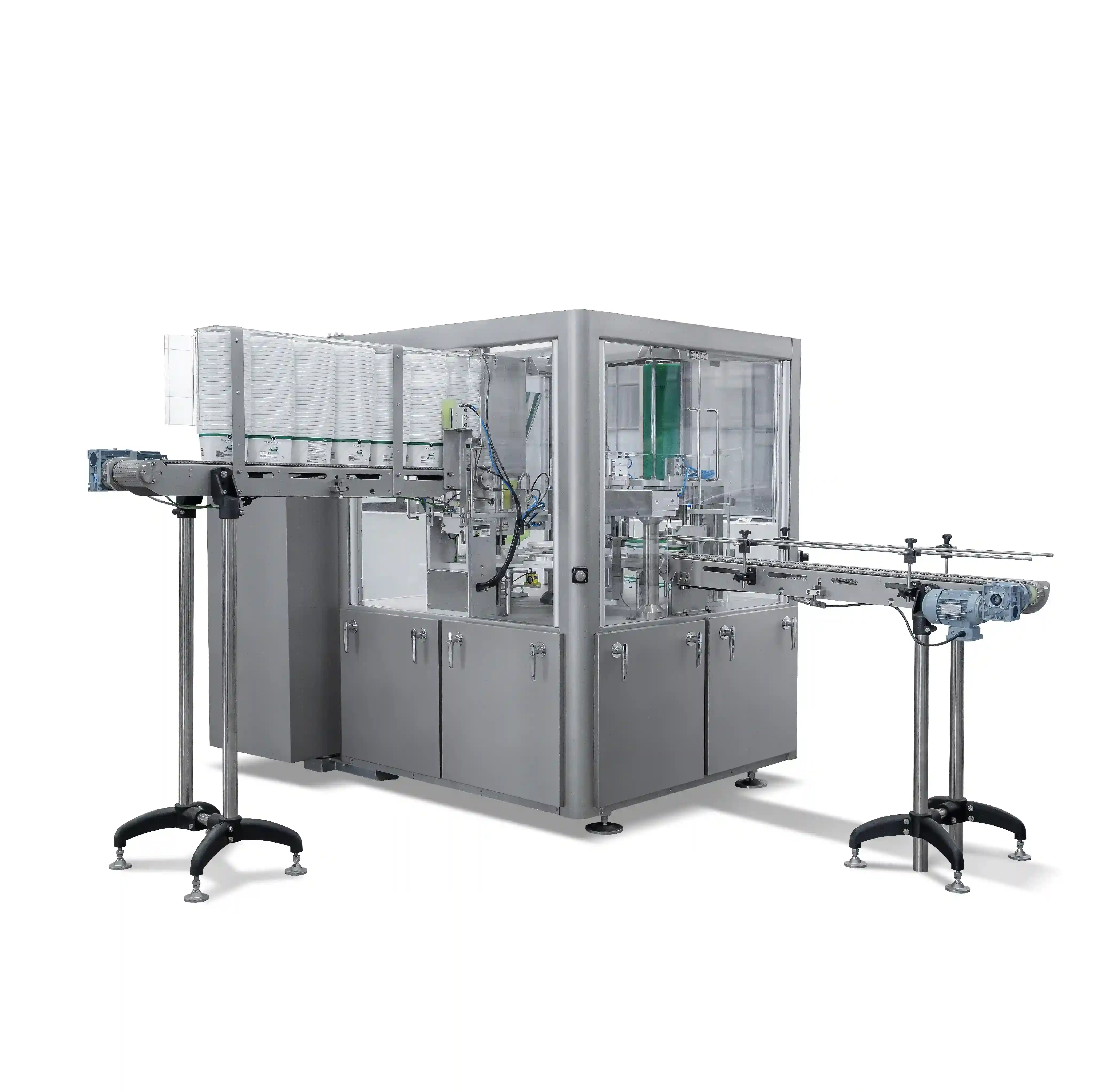
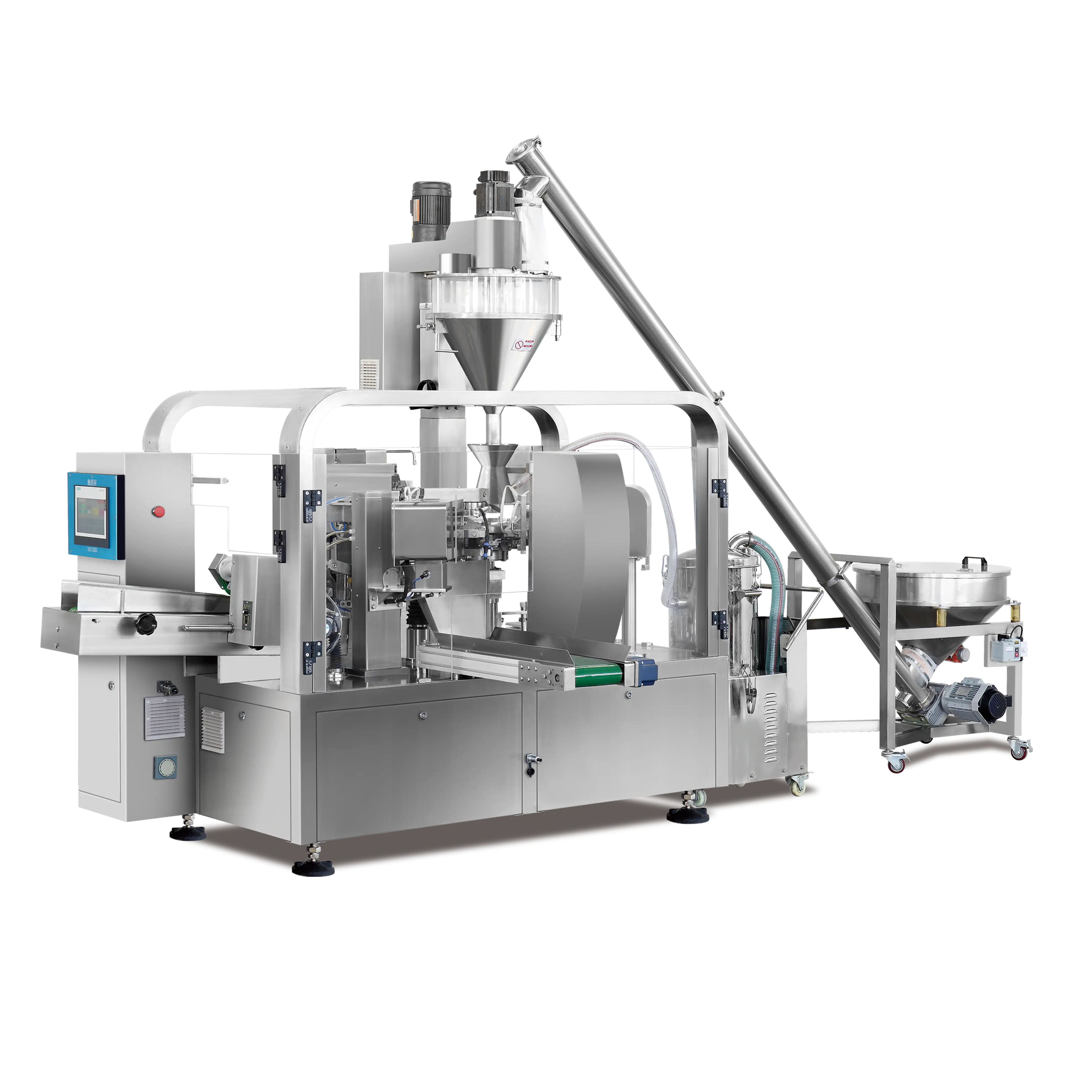
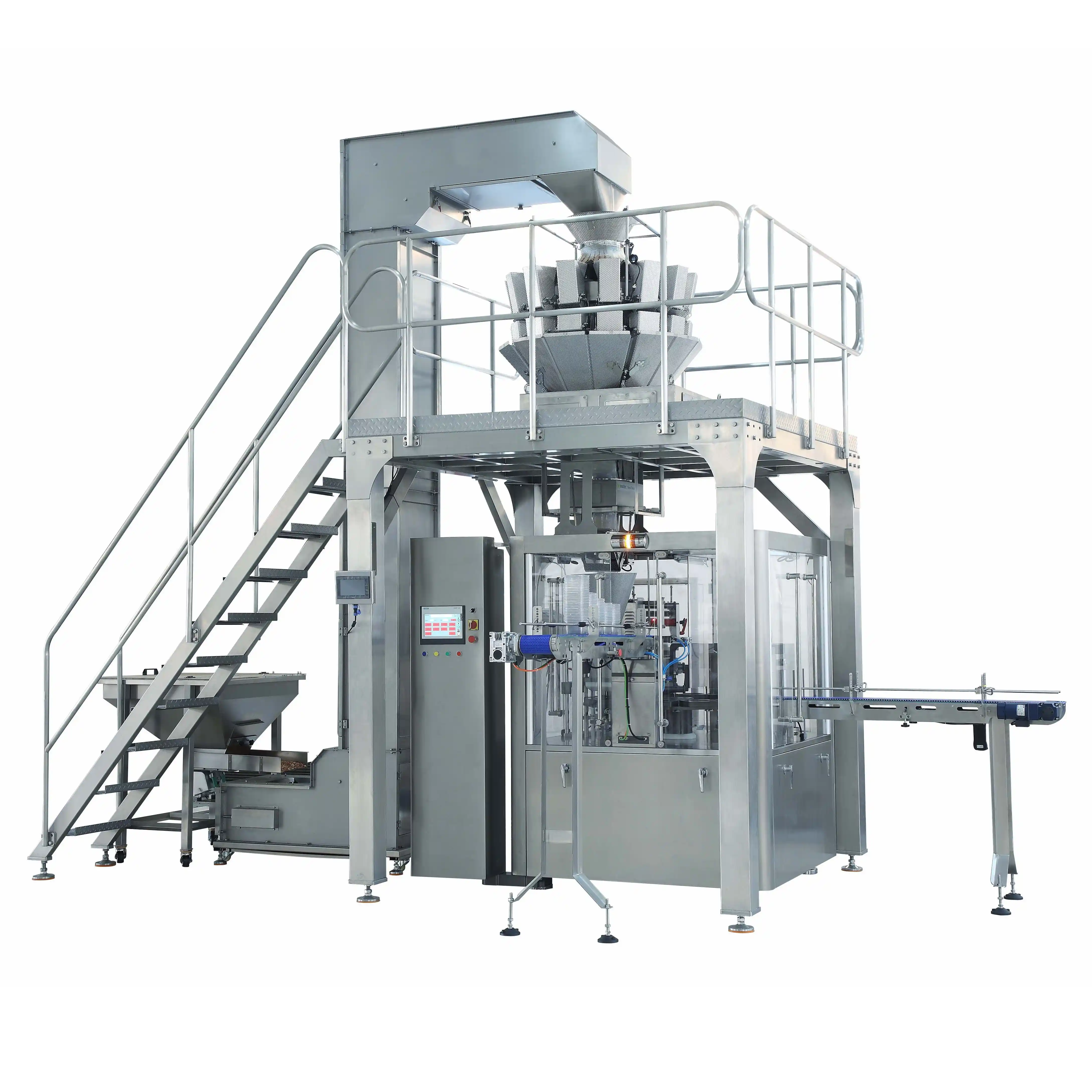
Auger Filler for Powder Dosing
An Auger Filler is a screw-based dosing unit for powders and other products suited to screw feeding. In a pre-made pouch line, it measures a target portion before the pouch moves to the next station. It is intended for projects where individual-piece counting is not the appropriate handling method. Product material, target pack weight, pouch size, and expected output provide a practical starting point for the filling discussion.
The supplied data specify this Auger Filler for package weights from 10 to 1,000 g and a stated filling-speed range of 40–120 bags per minute. Listed accuracy is within ±1% for weights up to 100 g and within ±0.5% from 100 to 1,000 g. These figures describe the specified equipment. Results in a working line are connected to selected screw, powder behavior, target weight, and material-feed consistency.
The auger is the stated measuring component. Because package weight changes with screw selection, identify the required dose range before selecting a filling arrangement. This separates verified machine data from application details that depend on the material and pack.
Technical Specifications
The following verified specifications provide planning information for an Auger Filler in a pouch packaging project.
| Item |
Specification |
| Package weight |
10–1000 g |
| Packing accuracy |
≤ ±1% (≤ 100 g); ≤ ±0.5% (100–1000 g) |
| Filling speed |
40–120 bags/min |
| Power supply |
3-phase 380 V, 50 Hz |
| Total power |
1.0 / 1.5 kW |
| Machine weight |
140 kg |
| Dimensions |
1300 × 850 × 1850 mm |
The electrical supply, total-power options, machine weight, and dimensions help frame early utility and floor-space planning. Consider the package-weight figure with the selected screw rather than as one fixed dose for every installation.
Working Principle and Line Context
The Auger Filler receives material at the dosing point, uses the screw to meter a portion, and discharges that portion during filling. It can serve as one dosing station within a broader pre-made pouch packaging solution. Material supply, pouch handling, and downstream transfer matter because the equipment operates in a connected packaging flow.
Start with whether powder supply and pouch presentation can remain consistent at the filling point, not only with the highest stated speed. The speed range does not establish output for every installation. Bulk density, flow behavior, dust generation, target fill weight, and upstream feeding can influence the operating rhythm of an Auger Filler.
Read the accuracy ranges with their relevant weight band and selected screw. The product page describes equipment function; final material testing, screw selection, and line layout depend on the project requirements.
Key Features
-
Screw-based measurement: The Auger Filler uses its auger as the stated measuring component for products suited to screw feeding.
-
Specified weight range: The stated 10–1000 g range supports discussion of different dosing targets.
-
Documented accuracy bands: The product data lists separate figures for weights up to 100 g and for the 100–1000 g range.
-
Line-planning speed reference: The stated 40–120 bags/min can be reviewed with pouch handling and material supply.
-
Installation information: Supplied power, dimensions, and weight provide a basis for utility and layout discussions.
These points are most useful together. Target weight affects screw selection, while practical speed is connected to powder feed and pouch transfer. The Auger Filler can therefore be considered with the actual product and packaging sequence rather than through one headline figure alone.
Material and Pack Considerations
Powders that look similar can behave differently during filling. Flow behavior, bulk density, moisture, dust generation, and consistency at the dosing point can affect configuration of an Auger Filler. Flour-like products, seasonings, and granular powders may need different attention even when required pack weights are similar.
For more than one pack size, identify the weight range before choosing the screw arrangement. For changing products, discuss the dosing screw and changeover routine. Cleaning access and a stable material feed are practical considerations where a product generates dust or shows variable flow characteristics.
Applications and Related Packaging Equipment
An Auger Filler can be considered for pre-made pouch lines handling powders or similar products suited to screw dosing. It is relevant when filling requires a defined target weight rather than a piece-counting method. Material information, intended pouch, fill weight, desired output, and available space help focus the configuration discussion.
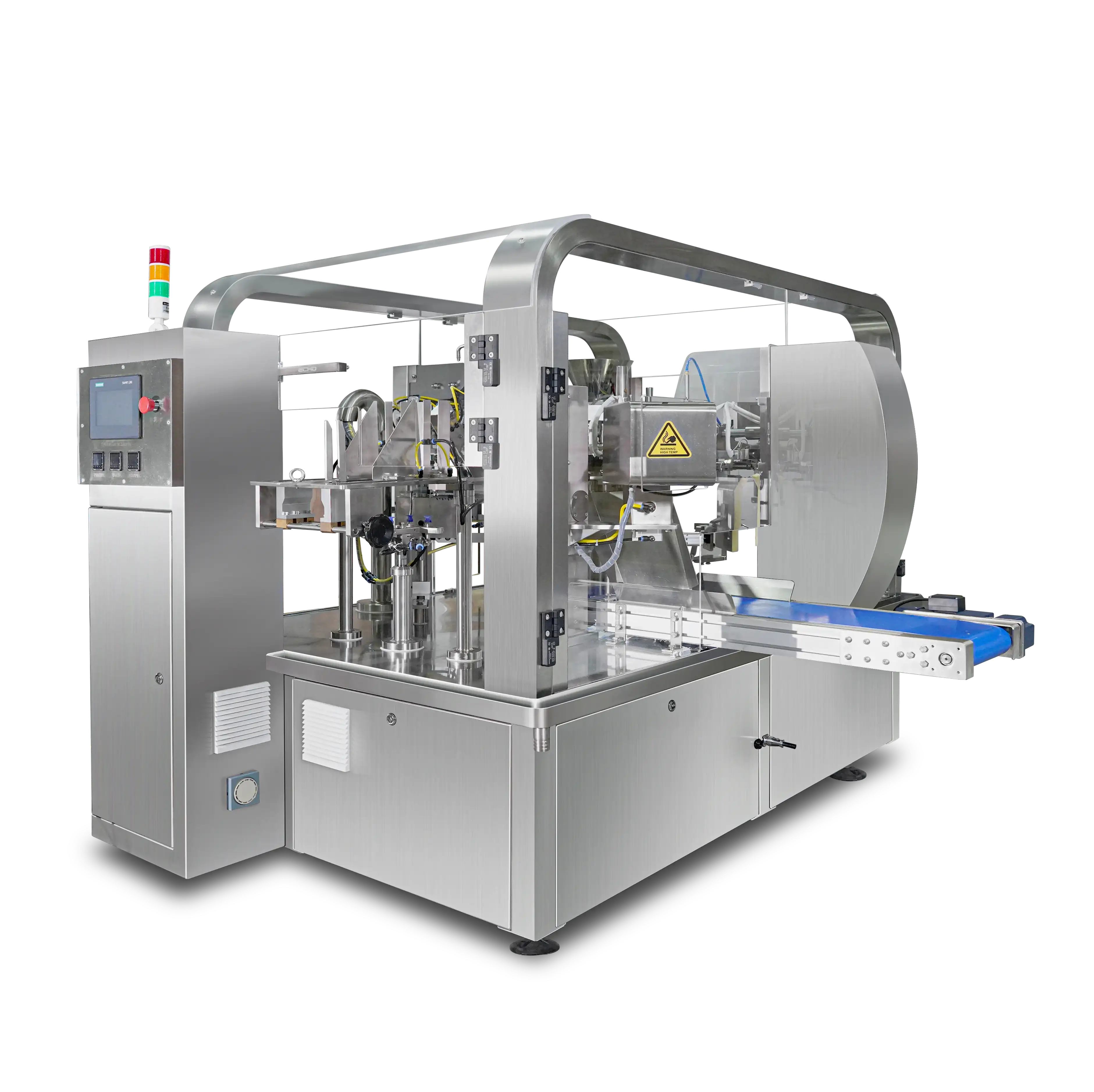
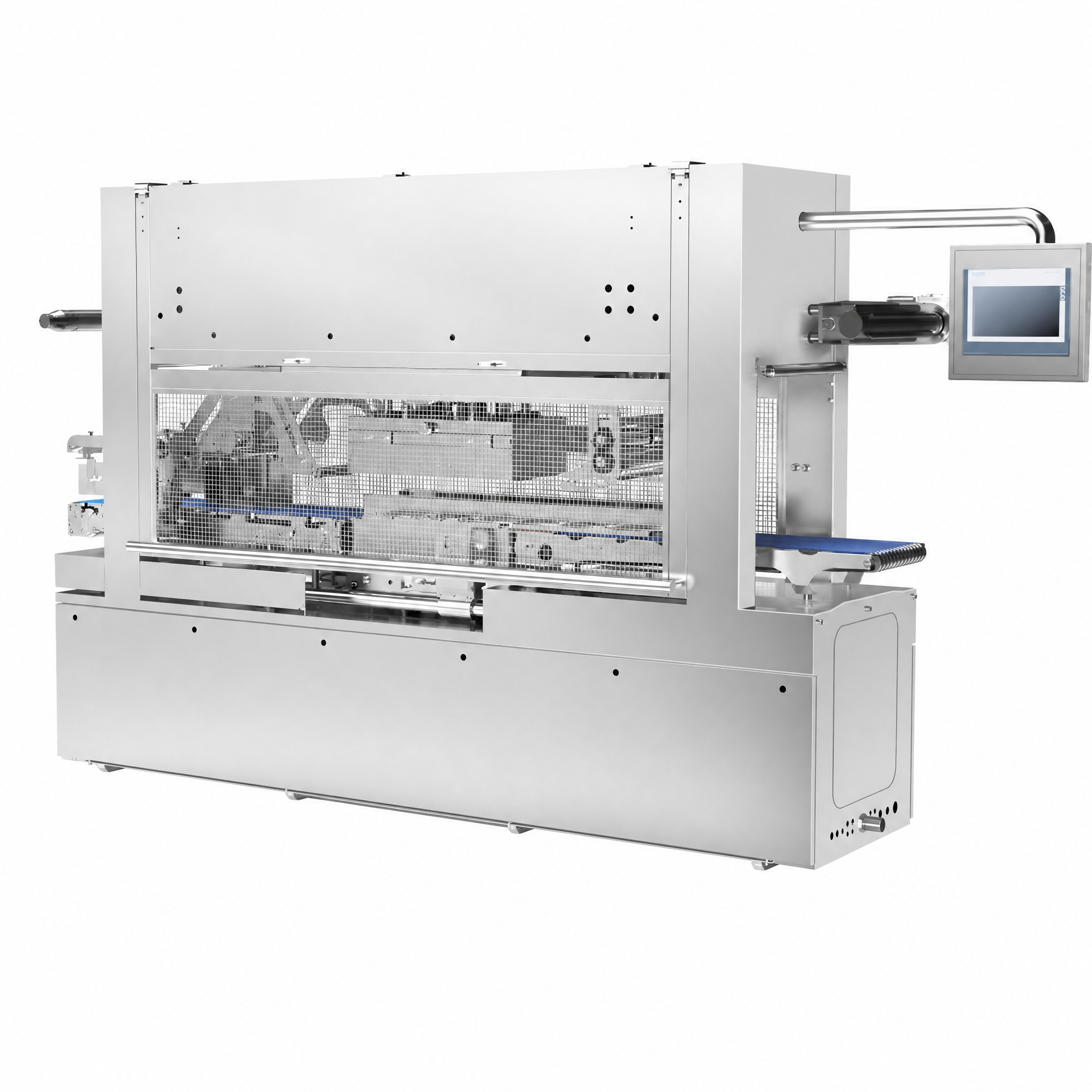
For a line including a vacuum pouch sealing machine, the filling and sealing stages should be treated as connected operations. The Auger Filler provides the powder dose, while pouch handling must present the pack properly to the next station. Where an aseptic packaging machine is part of a wider project, its process requirements must be considered separately; the supplied Auger Filler information does not establish aseptic capability.
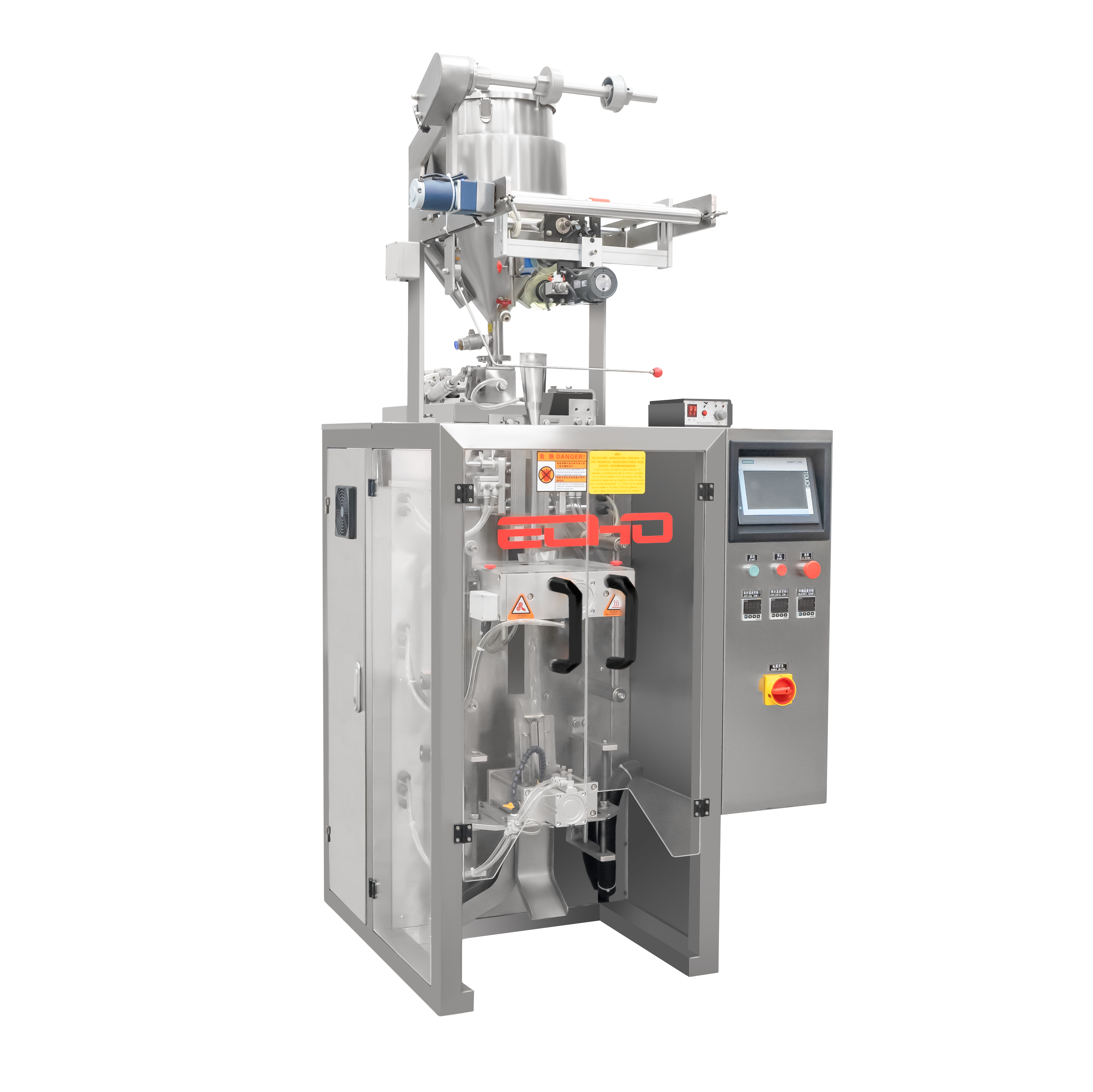
The same practical approach applies to food packaging machines for small business and wider food packaging projects. The stated specifications identify the Auger Filler’s dosing range and utilities, not a universal fit for every food product, hygiene requirement, or production arrangement. Material, pouch design, output target, and site conditions remain relevant to the proposed setup.
Configuration Matters
A high stated speed is not the only throughput factor. The Auger Filler works with material supply and pouch-transfer conditions that must remain stable through filling. The 40–120 bags/min figure is a specification reference; practical output is also connected to powder behavior, fill weight, material delivery, pouch handling, and the rhythm of the surrounding line.
Listed accuracy figures provide a defined equipment basis, while the product sample and target pack requirements help determine the appropriate setup. The supplied information describes ECHO’s focus on pre-made pouch packaging machinery and automated packaging solutions without adding unverified certifications, tolerance figures, or application claims.
Frequently Asked Questions
What products can an Auger Filler handle?
The Auger Filler is intended for powders and other products suited to a screw-feeding method. A representative material sample, its flow characteristics, and the target pouch weight provide a useful basis for discussing suitability.
Can one screw cover every package weight?
No single screw should be assumed to cover every application. Package weight changes with screw selection, so discuss the required range before configuration.
How should stated filling speed be interpreted?
The 40–120 bags/min figure is the specified range. Practical output should also consider powder behavior, target fill weight, material supply, pouch handling, and the operating rhythm of the full line.
Discuss Your Auger Filler Project
Share your product material, expected moisture and flow characteristics, target pack or container, required fill weight, desired output, existing equipment, and available installation space. These details help define how an Auger Filler may fit into a pre-made pouch packaging line and which configuration points should be reviewed.

 EN