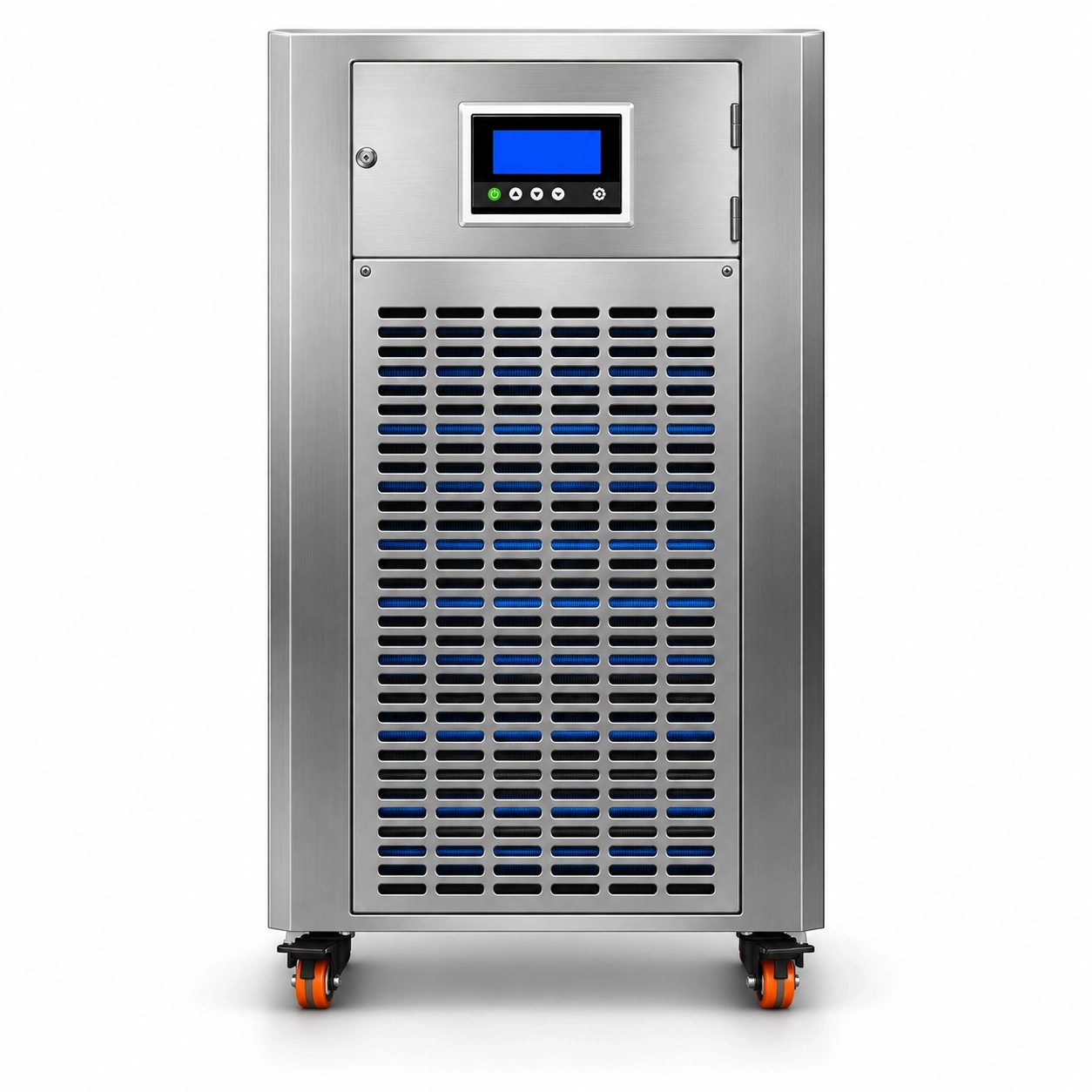
Industrial Chiller for Auxiliary Process Cooling
An Industrial Chiller is auxiliary equipment for production projects that need a managed cooling supply around compatible machinery or process equipment. This Industrial Chiller is intended to be considered as part of the working environment it supports, rather than as an isolated item. In a packaging or manufacturing project, the cooling requirement begins with the equipment to be served, the operating condition to be maintained, and the available installation conditions. The role of an Industrial Chiller is therefore best discussed alongside the process connection, utility arrangement, working schedule, and access around the planned location.
The available product information identifies this Industrial Chiller as an auxiliary industrial process-cooling solution. It may be considered where a connected process or machine needs cooling support during production. The required cooling duty, target operating condition, and connection method should be matched to the actual equipment in the project. This approach keeps the Industrial Chiller aligned with the use it is expected to serve and gives the project team a clear starting point for a technical discussion.
Product Role and Available Information
This Industrial Chiller is described for auxiliary process cooling in packaging machinery and production environments. It is a supporting system, not a product-dosing or pouch-sealing machine. Its contribution is linked to the connected process: the cooling unit is positioned to support a compatible installation where temperature control is required around production equipment. Because the operating need differs from one installation to another, the final arrangement should be based on the conditions of the machinery being cooled.
| Item |
Available information |
| Equipment category |
Industrial Chiller |
| Primary role |
Auxiliary industrial process cooling |
| Typical project context |
Packaging machinery and production environments |
| Selection basis |
Cooling duty, operating condition, utilities, connection and installation context |
Confirm all model-specific details before finalizing the configuration for the intended project.
Selection Features That Matter in Practice
-
Process-focused cooling support: The Industrial Chiller is considered around the cooling task required by the connected process or machine.
-
Application-led matching: Thermal load and temperature expectations help define the duty that the cooling system needs to perform.
-
Utility awareness: Available utility supply is an important part of planning how the Industrial Chiller will fit the installation.
-
Connection planning: The interface between the cooling unit and the equipment it serves should be reviewed for the proposed arrangement.
-
Installation consideration: Available area, distance to connected equipment, ambient conditions, and service access all affect practical placement.
A machine name is not a complete specification. For an Industrial Chiller, the useful question is what cooling condition the connected equipment needs during operation. If the process has a defined operating temperature or duty, that information can guide the configuration discussion. If those conditions have not yet been set, the product can still be reviewed as an auxiliary cooling direction while the application details are collected.
How an Industrial Chiller Fits a Production Project
An Industrial Chiller should be viewed as one link in a connected production environment. The cooling unit, the process equipment, available utilities, and the physical layout need compatible planning. The distance between the Industrial Chiller and the connected equipment can influence the routing and connection approach, while the location also needs to allow reasonable access for operation and service. These are practical installation questions that help turn a general cooling requirement into a suitable project arrangement.
For projects involving packaging machinery, ECHO can discuss the Industrial Chiller together with the wider equipment and factory-layout plan. That conversation can consider where the auxiliary unit will be located, how it will connect to the intended process, and how the overall installation will be organized. The product information supports an application-led review: the same category of cooling equipment may require a different arrangement when the connected process, operating schedule, or site conditions change.
Continuous and intermittent production schedules can also influence the information needed for a cooling discussion. Rather than assuming that a familiar-looking unit will serve every task in the same way, define the working requirement first. An Industrial Chiller can then be matched to the process context with a clearer view of utility supply, cooling duty, operating conditions, and installation space.
Suitable Application Contexts
Packaging Machinery Projects
Where packaging equipment or a related production process needs auxiliary cooling, an Industrial Chiller can be discussed as part of the broader machinery project. The relevant details include the equipment to be cooled, its operating condition, the anticipated schedule, and the proposed machine interface. This supports a practical conversation about how cooling equipment relates to the main installation.
General Production Environments
An Industrial Chiller may also be considered for manufacturing environments that require process cooling around compatible equipment. Ambient conditions, available floor area, connection distance, and access for service are useful inputs. These conditions help identify how the cooling unit may be placed and connected within the production area.
Factory Layout Planning
During factory-layout planning, the Industrial Chiller can be reviewed with the supporting utility and equipment arrangement in mind. Identifying the intended position early can help the project discussion account for service access and the path to the connected process. The final layout should reflect the actual site and project requirements.
Information to Share for a Product Discussion
To discuss an Industrial Chiller for a specific production project, share the equipment or process that requires cooling, the operating condition to be maintained, the expected production schedule, and the available installation area. Utility information, ambient conditions, the distance to the connected equipment, and the preferred connection method can also help focus the discussion. These inputs do not change the product category; they help define the configuration and installation context relevant to the project.
ECHO provides packaging machinery and coordinated production solutions, and can discuss auxiliary cooling requirements during overall equipment and layout planning. Contact the team with your process information to explore how an Industrial Chiller may be integrated with the intended production equipment. The conversation can focus on the cooling task, the connected process, and the practical conditions of the proposed installation.

 EN